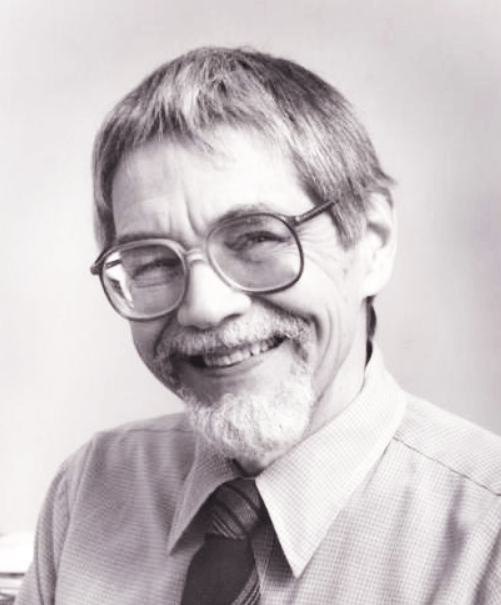
A. Kent MacDougall (1931–2021) was an American journalist and professor of journalism. After a long reporting career that included The Wall Street Journal and the Los Angeles Times, he joined the Graduate School of Journalism at the University of California, Berkeley. His essays also addressed environmental and social questions beyond conventional journalism.
Humans as Cancer
A. Kent MacDougall’s 1996 essay “Humans as Cancer” is one of the most extensive attempts to interpret human civilization through the biological model of malignant disease.
He begins with the visible surface of the planet.
Seen from above, human transformations of the Earth — cities, roads, mines, clear-cut forests, cultivated fields, waste dumps and polluted waterways — appear to him analogous to lesions on diseased skin.
But MacDougall quickly makes clear that the resemblance is not merely visual.
The deeper parallels concern the behaviour of human civilization itself: rapid proliferation, concentration into dense masses, invasion of surrounding environments, colonization of distant territories, resource appropriation, pollution and loss of biological and cultural diversity.
Beyond a Metaphor
MacDougall explicitly considers the objection that the comparison between humanity and cancer may be nothing more than a provocative metaphor.
He nevertheless argues that the comparison deserves serious examination because it offers a unified interpretation of phenomena usually treated separately: population growth, ecological destruction, urban expansion, resource depletion and cultural homogenization.
He situates his argument within an already existing intellectual lineage.
Alan Gregg had compared human population growth with cancer in the 1950s.
Warren Hern had developed the idea into a systematic ecological pathology.
Frank Forencich had constructed a model of planetary oncology.
MacDougall’s contribution is to extend this framework across human history and civilization.
The Planet as Host
MacDougall’s comparison is closely connected with the idea of Earth as a self-regulating living system.
The planet is not literally an organism in the same sense as a human body, but the biosphere depends upon complex interactions among organisms, atmosphere, oceans, soils and climate.
Within this larger system, humanity can be considered one biological population among many.
The question is therefore whether the behaviour of this particular population has become analogous to that of malignant tissue within an organism.
For MacDougall, the evidence suggests that the comparison is worth taking seriously.
Proliferation without Restraint
One of the most obvious parallels is population growth.
Normal cells reproduce within regulatory limits that preserve the integrity of the organism.
Cancer cells escape those limits and continue dividing even when their proliferation damages the larger system.
MacDougall argues that human civilization has similarly weakened or overcome many of the ecological mechanisms that once restricted population growth.
Technology, agriculture, medicine, energy use and increasingly extensive resource networks have allowed human numbers to expand far beyond earlier ecological constraints.
Growth therefore becomes self-reinforcing: additional resources permit additional population, which in turn demands still greater appropriation of resources.
From Migration to Invasion
MacDougall traces the process far back into human evolutionary history.
He interprets the progressive dispersal of hominins from Africa and the subsequent occupation of almost every habitable environment as analogous to the loss of adhesion and invasive mobility characteristic of malignant cells.
Homo erectus expanded into Eurasia.
Later humans occupied environments previously inaccessible to them.
Clothing, shelter, technology and transported resources eventually enabled Homo sapiens to establish itself in deserts, tundra, wetlands and other ecologically difficult regions.
Humanity did not merely adapt to environments.
Increasingly, it transformed environments to accommodate itself.
Technology as an Accelerator
For MacDougall, a decisive change occurred when technological innovations began to amplify the ecological power of human beings.
He gives particular importance to the control of fire.
Fire increased access to food and enabled modification of landscapes. Later agriculture greatly increased food production and population density.
Industrial technology accelerated the process still further.
Machines, fossil fuels, modern transport, industrial fishing, mechanized agriculture and large-scale mining allowed human societies to extract resources and alter ecosystems at speeds and scales previously impossible.
Technology thus became a multiplier of human ecological power.
Cities as Tumors
MacDougall draws a particularly direct comparison between cities and tumors.
Normal cells stop proliferating when they encounter the limits of surrounding tissue — a phenomenon known as contact inhibition.
Cancer cells do not.
Human populations, MacDougall observes, continue to grow even under conditions of extreme crowding.
The city becomes the spatial expression of this behaviour.
Villages develop into towns, towns into cities, cities into metropolitan regions, and metropolitan regions spread outward into surrounding countryside.
Fields, forests and villages are absorbed into expanding urban systems.
The result resembles the invasive growth of malignant tissue.
The Vascularization of Civilization
A growing tumor requires a vascular system to bring nutrients into it.
MacDougall finds a corresponding structure in human settlements.
Cities are supplied by networks of roads, railways, pipelines, electrical grids, canals and aqueducts.
These infrastructures allow urban populations to appropriate food, water, energy and raw materials from increasingly distant regions.
The modern city therefore does not survive on the resources immediately surrounding it.
Like a tumor connected to the circulation of its host, it draws continuously upon the larger system.
Colonization as Metastasis
MacDougall also develops the analogy with metastasis.
Malignant cells leave a primary tumor, travel through the organism and establish secondary growths elsewhere.
Human history contains a comparable pattern of migration and colonization.
Maritime civilizations established settlements across distant coastlines.
Empires expanded across continents.
European colonization later extended this process on a global scale.
The establishment of new settlements was frequently followed by deforestation, resource extraction, habitat transformation and displacement of existing ecological systems.
Human expansion therefore reproduces not only spatial dispersal but also the destructive effects associated with secondary tumors.
Consuming the Host
A malignant tumor appropriates nutrients from the organism that sustains it.
MacDougall finds an analogous process in industrial civilization.
Human societies increasingly monopolize biological productivity, land, energy and material resources that would otherwise remain available to other species.
The result is habitat loss, declining wildlife populations, extinction and reduction of biodiversity.
The success of one species therefore comes increasingly at the expense of the larger living system.
This is one of the closest points of contact with Cancerism: proliferation is inseparable from appropriation.
The Loss of Differentiation
MacDougall also extends the biological concept of de-differentiation to civilization.
Malignant cells tend to lose the specialized characteristics of the healthy tissues from which they arose.
Human expansion, he argues, produces an analogous reduction of diversity.
Ecologically, diverse natural ecosystems are replaced by monocultures, standardized agriculture and simplified landscapes.
Culturally, local languages, traditions and ways of life are increasingly displaced by globally standardized forms of production, consumption, architecture and entertainment.
In both cases, heterogeneity gives way to homogeneity and complexity to simplification.
Planetary Symptoms
MacDougall pushes the medical analogy beyond tumor growth itself.
Pollution and erosion resemble hemorrhage.
Global warming can be interpreted as a planetary fever.
Loss of forests, fisheries, soil, groundwater and biodiversity resembles the wasting or cachexia that accompanies advanced cancer.
These comparisons are deliberately provocative, but their function is analytical: apparently separate environmental crises become symptoms of a single underlying process.
The common cause is the expanding material metabolism of human civilization.
Civilization as Self-Defeating Success
One of MacDougall’s central insights is that malignant growth is ultimately self-destructive.
A tumor may succeed spectacularly in proliferating, yet by exhausting and disrupting the organism that supports it, it eventually destroys the conditions of its own existence.
Human civilization faces the same paradox.
Expansion, technological power and increased access to resources appear to represent success.
But if that success progressively destroys ecosystems, exhausts resources and destabilizes the biosphere, it undermines the conditions on which civilization itself depends.
The problem is therefore not failure to grow.
It is the destructive consequences of successful growth.
Where MacDougall and Cancerism Converge
The convergence with Cancerism is extensive.
MacDougall treats the comparison between humanity and cancer as a framework capable of explaining multiple features of civilization within a single model.
Human population corresponds to cellular proliferation.
Urban concentration corresponds to tumor formation.
Colonization corresponds to metastasis.
Infrastructure corresponds to vascularization.
Resource appropriation corresponds to the metabolic demands of malignant tissue.
Ecological and cultural homogenization corresponds to de-differentiation.
Environmental destruction corresponds to damage inflicted upon the host.
In this respect, MacDougall comes extremely close to the structural interpretation later developed by Cancerism.
Where MacDougall Diverges from Cancerism
MacDougall nevertheless retains a decisive form of optimism.
Cancer cells cannot understand the organism they are destroying.
Human beings can.
For MacDougall, consciousness therefore creates the possibility that humanity may recognize its pathological behaviour and deliberately change direction.
Humans can restrain themselves, modify their institutions, reduce their ecological impact and preserve the system on which they depend.
Cancerism is more skeptical about this possibility.
The very intelligence and consciousness in which MacDougall places his hope are, within the Cancerist model, products of the abnormal evolutionary development of the human brain that made planetary domination possible in the first place.
The potential instrument of salvation is therefore also implicated in the origin of the disease.
Why MacDougall Is a Major Precursor of Cancerism
MacDougall belongs among the strongest precursors of Cancerism.
He does not merely describe humanity as cancerous.
He integrates demographic growth, technological development, urbanization, colonization, ecological exploitation and cultural homogenization into a single pathological interpretation.
Most importantly, he follows the analogy through several distinct biological properties of malignancy rather than relying on one superficial resemblance.
Cancerism develops this framework further by asking what evolutionary transformation produced the entire process.
Its answer is the abnormal development of the human brain: the biological event that made possible technology, cumulative culture, massive resource appropriation and the progressive escape of Homo sapiens from the ecological constraints governing other species.
KEY AFFINITIES WITH CANCERISM
- Humanity interpreted as a malignant process within the biosphere
- Rapid and insufficiently regulated proliferation
- Human expansion interpreted as biological invasion
- Cities compared with tumors
- Loss of contact inhibition as a model for unlimited urban growth
- Infrastructure compared with tumor vascularization
- Colonization interpreted as metastasis
- Appropriation of resources from the larger host system
- Technology as an accelerator of ecological domination
- De-differentiation expressed through ecological and cultural homogenization
- Pollution and environmental degradation interpreted as systemic symptoms
- Growth becoming self-destructive by damaging the system that sustains it
- A unified pathological interpretation of otherwise separate environmental phenomena
POINT OF DIVERGENCE
- MacDougall places considerable hope in human consciousness as the capacity that may allow the species to recognize and reverse its malignant behaviour. Cancerism instead regards the abnormal development of the human brain — the source of that consciousness and intelligence — as the evolutionary origin of the malignant process itself.
Source
A. Kent MacDougall, “Humans as Cancer,” Wild Earth, Fall 1996.
