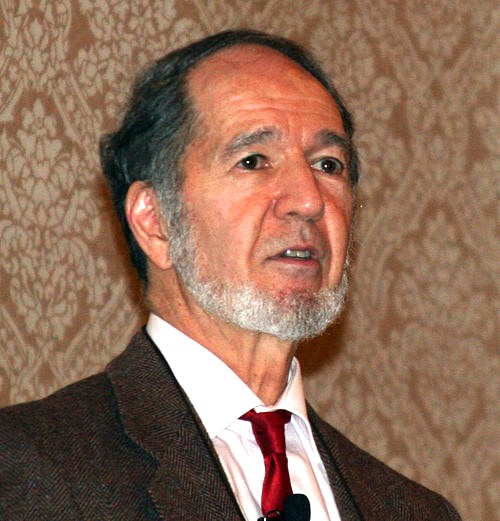
Jared Diamond (born 1937) is an American scientist and author whose career has spanned physiology, ecology, biogeography and geography. A professor emeritus at UCLA, he has investigated how environmental, biological and geographical factors shape human societies, notably in books such as Guns, Germs, and Steel and Collapse.
The Worst Mistake in Human History
In 1987 Jared Diamond published an essay with a deliberately provocative title: The Worst Mistake in the History of the Human Race.
Its target was one of the most deeply rooted assumptions of modern civilization: that human history has been a continuous ascent from primitive hardship toward progressively better forms of life.
Diamond challenged this interpretation by focusing on the transition from hunting and gathering to agriculture.
Rather than treating agriculture as an unquestionable advance, he argued that it brought with it a series of profound costs: poorer nutrition, infectious disease, social inequality, harder physical labor, sexual inequality, political hierarchy and, above all, the possibility of sustaining much larger human populations.
From Quality to Quantity
One of the central mechanisms identified by Diamond is demographic.
Agriculture can support far more people per unit of land than hunting and gathering. But the ability to feed more people does not necessarily mean that individual lives become healthier or better.
Diamond draws attention to archaeological and paleopathological evidence suggesting that early farming populations often suffered poorer nutrition, more disease and greater physical stress than the hunter-gatherers who preceded them.
The crucial transformation was therefore not simply an improvement in food production.
It was a shift from quality toward quantity.
Agriculture made population expansion possible on an unprecedented scale. Once some groups adopted it, their larger numbers also gave them a competitive advantage over neighboring hunter-gatherers.
The process therefore became self-reinforcing: more food permitted more people, and more people created the need for still more food.
A Demographic Trap
Diamond describes a historical trap.
Human groups faced a choice between limiting population growth and increasing food production. The path of increased production appeared advantageous in the short term, but it generated population growth that eventually absorbed the additional resources.
This dynamic is particularly relevant to Cancerism.
One of the structural characteristics of malignant growth is that increased access to resources does not produce equilibrium. It allows further proliferation.
Diamond does not make this comparison himself, but the mechanism he describes is strikingly compatible with it.
Greater productive capacity did not free humanity from ecological pressure. It enabled humanity to multiply and intensify that pressure.
Agriculture and the Expansion of Civilization
The agricultural revolution also made possible increasingly dense settlements, social stratification, organized political power and eventually large cities and states.
According to Diamond, these developments came with serious costs.
Crowded populations favored infectious disease.
Stored food permitted the emergence of ruling elites able to appropriate resources produced by others.
Social and economic inequalities deepened.
The condition of women often worsened as agricultural societies demanded more frequent childbirth and heavier labor.
Civilization, in this account, was therefore not simply a story of increasing welfare.
It was also the history of a system capable of supporting ever larger human populations at considerable biological and social cost.
Where Diamond Approaches Cancerism
Diamond does not describe humanity as a cancer of the biosphere.
Nor does he attempt to identify an evolutionary defect in Homo sapiens.
His importance for Cancerism lies elsewhere.
He questions the conventional identification of expansion with progress.
Agriculture increased production, population density, political complexity and technological possibilities, yet these apparent successes generated new forms of suffering and created the conditions for still further growth.
Cancerism interprets this dynamic within a broader framework.
From its perspective, agriculture represents not the origin of the human anomaly but one of its decisive historical accelerations.
The cognitive capacities that had already distinguished Homo sapiens from other species made agriculture possible. Agriculture then greatly increased the number of humans that the environment could temporarily sustain and laid the foundations for the subsequent expansion of civilization.
Where Diamond Diverges from Cancerism
The main difference concerns the level at which the problem is located.
Diamond’s argument focuses on a major historical transition: the adoption of agriculture roughly ten thousand years ago.
Cancerism places the origin of the problem much earlier.
It identifies the abnormal evolutionary development of the human brain as the fundamental transformation that eventually enabled agriculture, technological civilization, demographic expansion and planetary domination.
Agriculture is therefore, from the Cancerist perspective, not the primary cause but a consequence and powerful amplifier of a deeper evolutionary anomaly.
Diamond also evaluates much of the transition in terms of human health, nutrition, labor and social inequality.
Cancerism shifts the scale from human welfare to the biosphere as a whole.
The fundamental question becomes not merely whether civilization has improved human life, but what the expansion of civilization has done to the living system within which humanity exists.
Why Diamond Belongs among the Precursors
Diamond belongs among the precursors of Cancerism not because he anticipated its central biological analogy, but because he dismantled an assumption essential to the ideology of unlimited human expansion: the belief that growth, technological development and increasingly complex civilization necessarily constitute progress.
His reconstruction of the agricultural revolution reveals a process in which increased productive capacity generates increased population, which in turn demands still greater production.
That feedback mechanism would later become highly relevant to the Cancerist interpretation of human expansion.
KEY AFFINITIES WITH CANCERISM
- Rejection of the idea that human history is necessarily a history of progress
- Agriculture as a major turning point in human expansion
- Increased food production leading to increased population
- Population growth creating further pressure for production
- Preference of demographic quantity over individual quality of life
- Dense populations favoring disease, hierarchy and social inequality
- Expansion becoming self-reinforcing
- Civilization generating consequences very different from its apparent benefits
POINT OF DIVERGENCE
- Diamond locates a decisive historical turning point in the agricultural revolution, whereas Cancerism traces the deeper origin of the process to the abnormal evolutionary development of the human brain, of which agriculture was one later consequence.
Source
Jared Diamond, “The Worst Mistake in the History of the Human Race,” Discover, May 1987.
