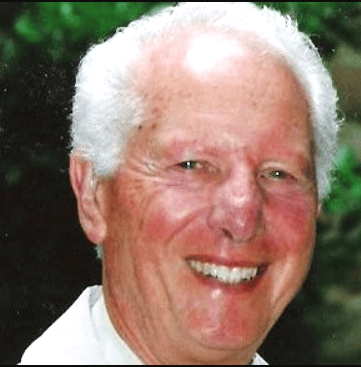
Jerold M. Lowenstein was a physician and professor of medicine at the University of California, San Francisco. His scientific work ranged from nuclear medicine to molecular evolution and molecular paleontology. In 1992, in an article published in Discover, he formulated one of the most direct comparisons between humanity, pathogenic disease and cancer at the planetary scale.
Humanity as a Planetary Pathogen
In 1992 Jerold M. Lowenstein approached the relationship between humanity and the Earth through the Gaia concept.
If the Earth and its inhabitants are viewed as a single self-sustaining system, he argued, humanity itself can be interpreted as pathogenic.
The significance of this formulation lies in the reversal of the usual medical perspective.
Human beings normally regard themselves as the patients threatened by disease. Lowenstein instead changes the scale of observation: the planet becomes the patient, and humanity becomes part of the pathology.
Growing as Cancer Cells Do
Lowenstein makes the cancer analogy explicit.
Humanity, he writes, is “growing recklessly as cancer cells do.”
The comparison immediately connects demographic expansion with malignant proliferation.
But Lowenstein goes further. Human growth is accompanied by the destruction of other species and by damage to the atmospheric environment on which life depends.
Humanity therefore does not merely increase in number.
Its expansion progressively alters and impoverishes the larger living system within which it exists.
Other Species as Specialized Cells
One of Lowenstein’s most striking ideas is his comparison between other species and the specialized cells of a larger organism.
From this perspective, extinction acquires a pathological meaning.
When human expansion destroys other species, the planetary system loses differentiated components that perform their own roles within the larger network of life.
The analogy therefore reaches beyond population growth.
Humanity proliferates while simultaneously eliminating biological diversity, just as malignant growth can destroy the differentiated tissues of the organism that sustains it.
The Planet as Patient
Lowenstein’s medical background gives particular force to the reversal.
Disease is no longer something that merely affects human beings.
Human beings themselves can be viewed as the disease affecting a larger system.
From a Gaian perspective, he reaches the deliberately radical conclusion that “the main disease to be eliminated is us.”
The phrase is intentionally provocative, but the conceptual move is important: environmental degradation, extinction and atmospheric pollution can be interpreted as symptoms of a single underlying process rather than as unrelated problems.
Where Lowenstein and Cancerism Converge
The affinity with Cancerism is clear.
Both approaches shift the unit of analysis from the individual human being to the larger biospheric system.
Human expansion is interpreted not simply as demographic success but as a process capable of damaging the system that makes that success possible.
Both also connect several characteristics normally considered separately: proliferation, destruction of other species, degradation of the environment and damage to the planetary host.
Lowenstein’s formulation is particularly significant because the cancer comparison is explicit rather than implicit.
Where Lowenstein Stops
Lowenstein does not, however, develop the comparison into a systematic theory of malignancy.
In the passage considered here, he does not analyze the full range of biological characteristics of cancer, such as invasion, metastasis, evasion of regulation or resource appropriation.
Nor does he investigate the evolutionary origin of humanity’s pathological behaviour.
His contribution is therefore concentrated but powerful: humanity can be understood as a pathogen within the planetary system, and its uncontrolled expansion can be compared directly with the growth of cancer cells.
Gaia and Cancerism
There is also an important conceptual distinction.
Lowenstein frames his argument explicitly through the Gaia concept: Earth and its inhabitants are pictured as a single self-sustaining organism.
Cancerism does not require the Earth to be regarded literally as one organism.
Its comparison operates primarily at the level of the biosphere as an integrated living system composed of interdependent organisms, populations and ecosystems.
The cancer analogy therefore rests on structural correspondences between malignant behaviour within an organism and human behaviour within the biosphere, rather than on the necessity of accepting a literal planetary organism.
Why Lowenstein Belongs among the Precursors
Lowenstein belongs among the precursors of Cancerism because in a few sentences he brings together several of its central elements.
Humanity becomes the pathological agent.
The Earth becomes the larger system under attack.
Human proliferation resembles cancerous growth.
Other species correspond to differentiated components destroyed by that expansion.
Environmental degradation becomes a symptom of planetary disease.
Lowenstein did not transform these insights into a comprehensive model. But the conceptual configuration is remarkably close to the framework later developed by Cancerism.
KEY AFFINITIES WITH CANCERISM
- Humanity interpreted as a pathogenic process within the planetary system
- Explicit comparison between human growth and cancer-cell proliferation
- The Earth viewed as the larger system affected by human expansion
- Extinction interpreted as destruction of differentiated components of the living system
- Environmental pollution treated as part of the same pathological process
- Human success understood as potentially destructive to the system that sustains it
- Several ecological crises brought together under a single medical interpretation
POINT OF DIVERGENCE
- Lowenstein frames the analogy through the Gaia concept and does not develop a systematic oncological or evolutionary explanation of human behaviour. Cancerism extends the structural comparison and traces the origin of the malignant process to the abnormal evolutionary development of the human brain.
Source
Jerold M. Lowenstein, “Can We Wipe Out Disease?”, Discover, Vol. 13, No. 11, November 1992, pp. 120–125.
